Thinking about heading to the United States? It can seem like a big process, especially figuring out the visa part. This guide is here to break down the US visa application process for folks in Nigeria. We’ll cover everything from picking the right visa to what happens after your interview. Let’s get this sorted out so you can plan your trip with more confidence.
Understanding US Visa Types For Nigerians
So, you’re thinking about heading to the United States. That’s exciting! But before you start packing, we need to talk about visas. It can seem a bit confusing at first, with all the different types and rules. Let’s break it down.
Navigating Non Immigrant Visa Options
Most Nigerians who travel to the US do so on a non-immigrant visa. These are for temporary stays. Think tourism, visiting family, short business trips, or studying. The most common one is the B visa, which covers both business (B1) and tourism (B2). If you’re going for school, you’ll likely need an F visa. For cultural exchange programs, it’s usually a J visa. It’s really important to pick the right category because applying for the wrong one can cause delays or even get your application denied. You can find more details about specific non-immigrant visas on the U.S. Department of State website.
Exploring Immigrant Visa Pathways
Now, if your plan is to move to the US permanently, you’ll be looking at immigrant visas. These are for people who want to live and work in the United States long-term. This usually starts with a U.S. citizen or a lawful permanent resident relative filing a petition for you. There are also employment-based immigrant visas, but those often require a U.S. employer to sponsor you. These pathways are generally more complex and take longer than non-immigrant visas.
Determining the Right Visa Category
How do you figure out which visa is the one for you? It all comes down to the purpose of your trip. Are you going for a vacation? A conference? To get married? To attend university? Each reason has a specific visa type. For short-term visits to the United States, including tourism, business, and education, you can apply directly online using form DS-160. It’s best to be honest and clear about your intentions. If you’re unsure, it’s better to ask for clarification than to guess. You don’t want to end up in a situation where you’ve applied for the wrong visa, which can really complicate things down the line. Think carefully about what you want to achieve in the U.S. and match that to the visa requirements.
Preparing Your US Visa Application Documents
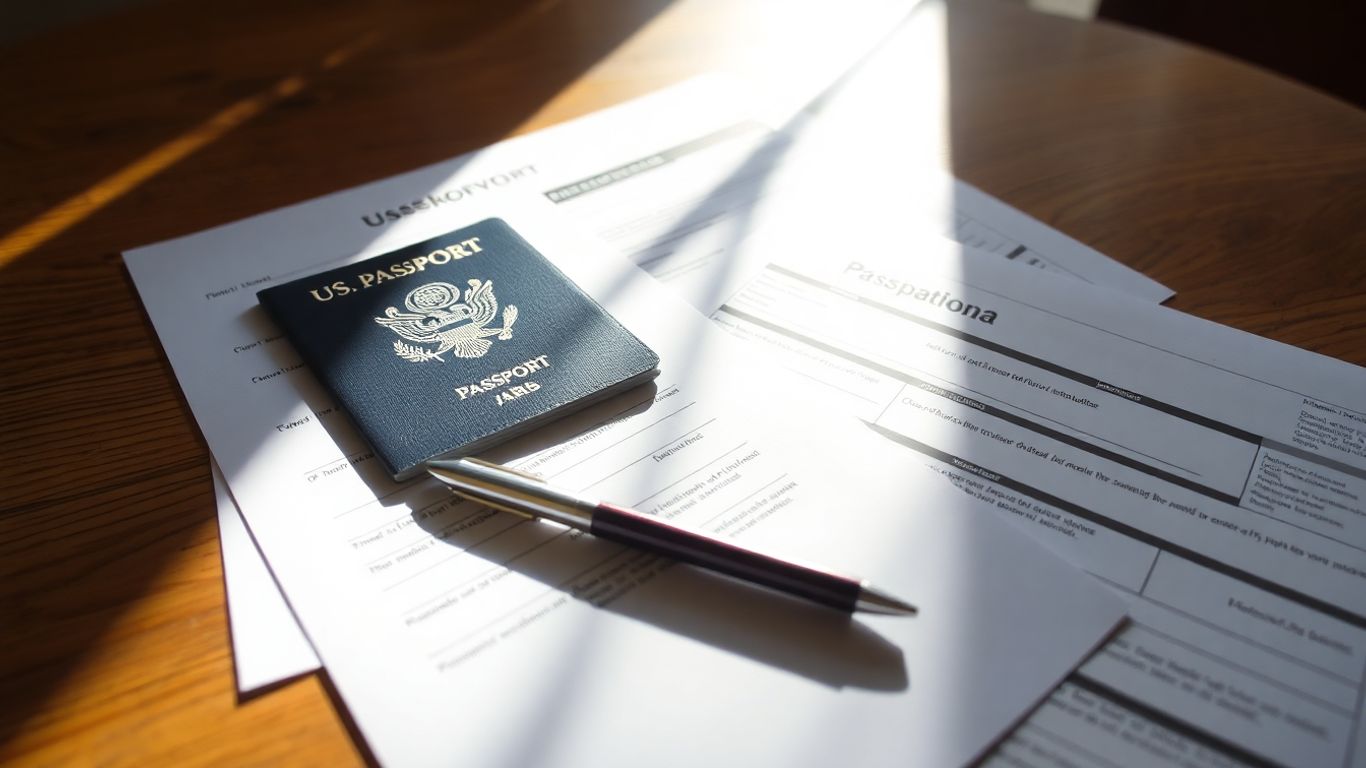 Alright, so you’ve figured out which visa you need. That’s a big step! Now comes the part where you gather all the paperwork. This isn’t just about throwing things in a folder; it’s about presenting a clear picture of who you are and why you want to go to the US. Getting your documents in order is arguably the most important part of the whole process.
Essential Identification and Passport Requirements
First things first, your passport. It needs to be valid for at least six months beyond your intended stay in the United States. If your passport expires sooner than that, you’ll need to renew it before you can even think about applying. Make sure it has at least one blank page for the visa stamp. You’ll also need copies of your old passports if they contain any previous US visas. Beyond the passport, you’ll need your birth certificate and possibly a national identity card. It’s always a good idea to have photocopies of everything, just in case.
Financial Proof and Sponsorship Documentation
This is where you show the consular officer that you can support yourself financially during your trip and that you won’t become a public charge in the US. If you’re funding your trip yourself, you’ll need bank statements, usually for the last six months. Pay stubs are also good to include. If someone else is sponsoring you, they’ll need to provide their own financial documents, like bank statements and proof of income, along with a letter explaining their relationship to you and their willingness to sponsor your trip. This letter is often called an affidavit of support, though the specific form might vary.
Supporting Documents for Your Specific Visa Type
This is where things get a bit more tailored. What you need depends heavily on the type of visa you’re applying for. For example:
For students (F or M visas): You’ll need your I-20 form from the US school, acceptance letters, and proof of tuition payment or a plan for how you’ll pay.
For tourists or business visitors (B1/B2 visas): Evidence of your ties to Nigeria is key. This could include a letter from your employer stating your position and that you have approved leave, proof of property ownership, or marriage certificates.
For work visas (H, L, O, P visas): You’ll need the petition approval notice (like the I-797), your employment contract, and any relevant professional licenses or certifications.
It’s better to bring too many documents than too few. If you think a document might be relevant, pack it. You can always choose not to present it, but you can’t go back home to get something you forgot.
Remember, the goal is to present a consistent and believable story. Each document should support your application and help paint a clear picture of your intentions and your ability to meet the visa requirements.
Completing the Online Visa Application Form
Alright, so you’ve figured out which visa you need. The next big step is filling out the actual application. For most non-immigrant visas, this means tackling the DS-160 form online. It’s a pretty detailed questionnaire, and getting it right is super important. Accuracy here can really make or break your application.
DS-160 Form: A Detailed Walkthrough
The DS-160, or Online Nonimmigrant Visa Application, is where you’ll provide all the personal details, travel plans, and background information the U.S. government needs to assess your eligibility. It covers everything from your name and date of birth to your passport details, family information, education, work history, and specific travel plans to the U.S. You’ll also be asked about security-related questions.
It’s a long form, so don’t expect to finish it in five minutes. Break it down into sections. You can save your progress and come back to it later, but make sure you keep your application ID handy. You’ll need it to retrieve your saved form.
Accurate Information Submission Best Practices
Seriously, double-check everything before you hit submit. Any mistakes, even small ones, can cause delays or even lead to your application being rejected. Think about it: if you can’t get the application form right, how can they trust you with a visa?
Use your full legal name exactly as it appears on your passport.
Be truthful about your travel history, employment, and personal circumstances. Don’t try to hide anything.
Ensure dates are correct, especially for passport validity, previous travel, and employment periods.
Answer all questions to the best of your ability. If a question doesn’t apply, there’s usually an option to indicate that.
Remember, the information you put on the DS-160 is what the consular officer will use during your interview. If there are discrepancies, it’s a red flag.
Uploading Your Digital Photograph
Your photo needs to meet specific requirements. It’s not just any selfie! The U.S. Department of State has strict guidelines for visa photos. They need to be recent (taken within the last six months), in color, and have a plain white background. Your face should be clearly visible, and you shouldn’t be wearing glasses (unless for medical reasons, with a doctor’s note).
Make sure the digital file is the correct size and format. The DS-160 form will prompt you to upload it. If your photo doesn’t meet the standards, you’ll likely be asked to provide a new one at the interview, which can cause delays.
Key Photo Requirements:
| Requirement | Detail |
|---|---|
| Size | 2×2 inches (51×51 mm) |
| Background | Plain white or off-white |
| Head Position | Full face, directly facing the camera |
| Head Height | Between 1 inch and 1 3/8 inches (25-35 mm) |
| Eyes | Visible and open, looking at camera |
| Attire | Normal street attire |
| Headwear | Generally not allowed (exceptions for religious/medical) |
Getting this form right is a big hurdle, but take your time, be honest, and double-check everything. It sets the stage for the rest of your application process.
Scheduling and Attending Your Visa Interview
So, you’ve finished the DS-160 and gathered all your paperwork. The next big step is getting that interview scheduled. It’s a pretty important part of the whole process, so let’s break it down.
Booking Your Appointment at the Embassy or Consulate
First things first, you need to book your interview. This usually happens on the official U.S. visa information service website for Nigeria. You’ll need your passport number, the barcode number from your DS-160 confirmation page, and the fee payment receipt number.
Here’s a general idea of the steps:
Create an Account: You’ll likely need to register on the appointment scheduling website.
Enter Your Details: Input the required information like your passport and DS-160 numbers.
Select Location: Choose the U.S. Embassy or Consulate where you want to have your interview (usually Lagos or Abuja).
Choose a Date and Time: Available dates and times will be shown. Pick one that works for you. Keep in mind that popular times can fill up fast, so try to book as early as possible.
Confirm: Review your selection and confirm the appointment.
It’s really important to book your appointment well in advance, especially during peak travel seasons.
Preparing for Common Interview Questions
The interview itself is where a consular officer will ask you questions to decide if you qualify for the visa. They want to understand your intent for traveling to the U.S. and make sure you plan to return to Nigeria.
Some questions you might hear include:
- What is the purpose of your trip to the United States?
- How long do you plan to stay in the U.S.?
- Who will be sponsoring your trip?
- What do you do for work in Nigeria?
- Do you have family in the U.S.?
- What ties do you have to Nigeria that would make you return?
Be honest and straightforward with your answers. Stick to the facts and don’t try to over-explain or give answers you think they want to hear. Your supporting documents should back up what you say.
Think of the interview as a conversation. The officer is just trying to get a clear picture of your situation and your travel plans. Being calm and prepared makes a big difference.
What to Expect During the Interview Process
When you arrive at the Embassy or Consulate, there will be security checks, similar to airport security. You’ll need to leave most of your belongings outside, so check the list of prohibited items beforehand.
Check-in: You’ll check in with security personnel and likely have your documents scanned.
Waiting: You’ll then proceed to a waiting area until your turn.
The Interview: Your name will be called, and you’ll go to a specific window to speak with the consular officer. The interview is usually quite brief, often just a few minutes.
Document Review: The officer might look at some of your documents, but they often base their decision primarily on your answers.
After the interview, the officer will tell you if your visa is approved, refused, or if it requires further administrative processing. If approved, they’ll keep your passport to place the visa inside. If refused, they’ll return your passport and usually provide a letter explaining the reason.
Post Interview Procedures and Visa Issuance
 So, you’ve finished your US visa interview. What happens next? It can feel like a bit of a waiting game, but knowing the process helps.
Understanding Approval, Refusal, and Administrative Processing
After your interview, the consular officer will tell you their decision. Sometimes it’s a clear yes or no. Other times, they might say your case needs administrative processing. This just means they need to do a bit more checking, which can take a few days or even weeks. It’s not necessarily a bad thing, but it does mean a delay in getting your passport back. If your visa is approved, congratulations! If it’s refused, the officer should explain why, and you’ll get a refusal letter. Sometimes, you can reapply if you can address the reasons for the refusal.
Collecting Your Passport and Visa
If your visa is approved and doesn’t require further processing, you’ll be told how to get your passport back. Usually, you can pick it up at a designated location, or it can be couriered to you. Make sure you have a valid way to track your passport’s return. Check the embassy or consulate’s website for specific details on pickup points or delivery options. It’s important to have your application reference number handy when you go to collect it.
Next Steps After Receiving Your US Visa
Once you have your passport with the visa stamp, double-check all the information on it for accuracy. Look at the visa type, expiration date, and your personal details. If everything looks good, you’re one step closer to your trip! Remember, a visa doesn’t guarantee entry into the United States; that decision is made by the Customs and Border Protection officers at the port of entry. Plan your travel arrangements, but perhaps hold off on non-refundable bookings until you have your visa in hand. You can find more information about the interview process at the U.S. Embassy in Nigeria.
It’s always a good idea to keep copies of all your application documents, even after you’ve submitted them. This way, if anything comes up, you have a record of what you provided.
Common Pitfalls in the US Visa Application Process
So, you’re getting ready to apply for a US visa. That’s exciting! But before you get too far, let’s talk about some common slip-ups that can really mess things up. Honestly, a lot of people stumble over the same things, and knowing about them beforehand can save you a ton of hassle.
Avoiding Incomplete or Inaccurate Applications
This is a big one. The DS-160 form, the main application, needs to be filled out perfectly. If you miss a question, put in the wrong info, or just rush through it, that’s a red flag. Think of it as your first impression, and you want it to be a good one. Make sure every detail is correct, from your name spelling to your travel dates. It’s better to take your time and get it right than to have to deal with the consequences later. You can find helpful tips on completing the DS-160 form on the official U.S. Department of State website.
Addressing Ties to Your Home Country Effectively
Consular officers want to see that you have reasons to return to Nigeria after your visit. This means showing you have a job, family, property, or other commitments back home. If you don’t present strong ties, they might think you intend to stay in the US permanently, which isn’t what a non-immigrant visa is for. So, gather documents like employment letters, property deeds, or marriage certificates. It’s about proving you have a life you’re coming back to.
Demonstrating Genuine Intent for Travel
This ties into the previous point. Why are you really going to the US? Are you visiting family, attending a conference, or going on vacation? Be clear and honest about your purpose. If your story doesn’t add up, or if you seem vague about your plans, it can raise doubts. Having a clear itinerary and being able to explain your trip confidently during the interview is key.
Sometimes, people get so focused on just getting the visa approved that they forget the ‘why’ behind their trip. Being able to articulate your genuine reasons for travel, backed by solid evidence, is what the officers are looking for. It’s not just about filling out forms; it’s about telling your story truthfully and convincingly.
Here are a few more things to watch out for:
Financial Proof: Make sure your bank statements show consistent income and enough funds for your trip. Sudden large deposits right before applying can look suspicious.
Previous Visa History: If you’ve had visa issues before, be prepared to explain them honestly.
Interview Preparation: Don’t just wing the interview. Practice answering common questions about your trip and your ties to Nigeria. Knowing your application inside and out is a good start.
Wrapping Up Your US Visa Journey
So, that’s a look at applying for a US visa as a Nigerian. It can seem like a lot, with all the forms and appointments. Just take it one step at a time. Make sure your paperwork is in order and that you can clearly explain why you want to visit the US. Honesty is really important here. If you’ve done your homework and are prepared, you’ll feel much more confident. Good luck with your application!
Frequently Asked Questions
What’s the first step to apply for a US visa from Nigeria?
The very first thing you need to do is figure out which type of US visa fits your reason for traveling. Are you visiting for fun, school, work, or something else? Once you know the visa type, you can start gathering the necessary paperwork and filling out the online application.
What kind of documents do I usually need for a US visa application?
You’ll definitely need your current passport and maybe some old ones. You also have to show you have enough money to cover your trip and that you plan to return to Nigeria. This might mean bank statements or a letter from someone sponsoring you. Plus, you’ll need papers that prove why you’re getting that specific visa, like a letter from a US school or employer.
Is the DS-160 form hard to fill out?
The DS-160 is an online form that asks for a lot of details about you, your trip, and your background. It’s important to be super careful and honest when filling it out. Make sure all the information is correct, and double-check everything before you submit it. You’ll also need to upload a recent photo that meets specific rules.
What happens at the US visa interview?
At the interview, a consular officer will ask you questions about your trip, your plans in the US, and your life here in Nigeria. They want to make sure you’re telling the truth and that you meet all the requirements for the visa. Be polite, answer clearly, and bring all your original documents with you.
What if my visa application is denied?
If your visa is denied, the officer will usually tell you why. Sometimes, it’s because you didn’t provide enough proof or there were mistakes in your application. You might be able to reapply after fixing the issues, but it’s best to understand the reason for denial first.
How important is it to show I have ties to Nigeria?
Showing you have strong reasons to come back to Nigeria is really important. This could be a job, family, property, or school enrollment. It helps the US government believe you’re not planning to stay in the US permanently when you’re applying for a temporary visa.