Understanding the UK Student Visa
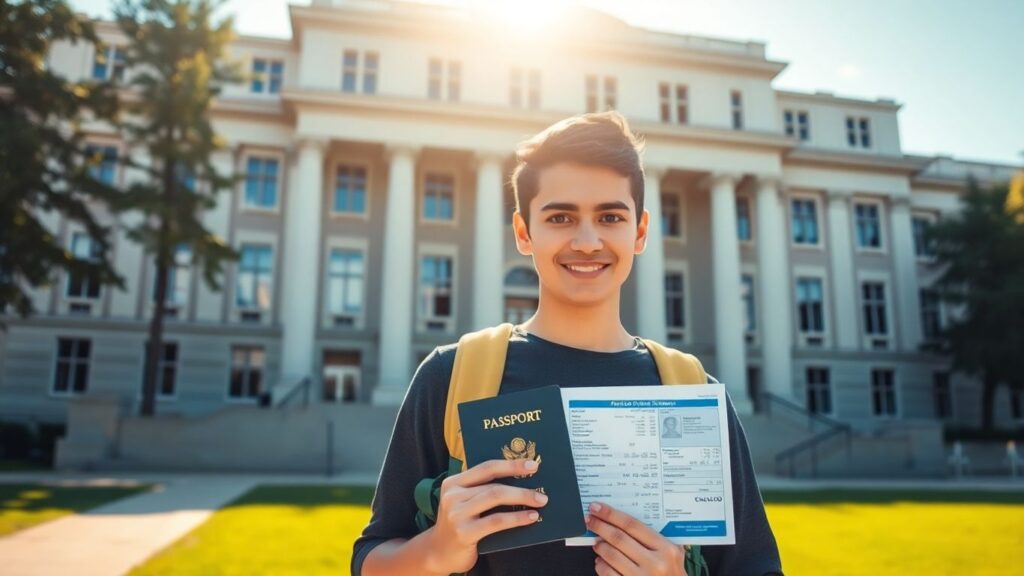
So, you’re thinking about studying in the UK? That’s pretty exciting! The main way to do this is by getting a UK Student visa. It’s basically the ticket you need to come over and hit the books. This visa replaced the old Tier 4 (General) Student visa, so if you’ve heard of that, this is its successor. It’s designed for people who have a confirmed place on a course with a UK educational institution that’s licensed to sponsor international students.
Eligibility Criteria for Applicants UK Student Visa
To even think about applying, you need to meet a few basic things. First off, you have to be at least 16 years old. Then, you need to have an offer from a licensed sponsor – that’s your university or college. They’ll give you something called a Confirmation of Acceptance for Studies (CAS), which is super important. You also need to prove you can support yourself financially while you’re here, covering both your course fees and living costs. And yes, you’ll need to show you can speak, read, write, and understand English. If you’re 16 or 17, you’ll also need written permission from your parents or guardians.
Visa Replaced Tier 4 (General) Student Visa
Just to be clear, the Student visa is the new name for what used to be the Tier 4 (General) Student visa. The UK government updates its immigration rules from time to time, and this was part of a change to simplify the system. So, if you see references to Tier 4, know that the Student visa is the current equivalent.
When to Apply for Your UK Student Visa
Timing is key here. If you’re applying from outside the UK, you can submit your application up to six months before your course is scheduled to start. If you’re already in the UK on a different visa and want to switch to a Student visa, you can apply up to three months before your course begins, but you must apply before your current visa expires. It’s generally a good idea not to leave it too late, as processing times can vary.
It’s important to remember that even if your course starts on a certain date, you can only travel to the UK from a specific date indicated on your visa or in your confirmation email. Don’t book flights before checking this!
Essential Documentation for UK Student Visa Application
Getting your UK student visa application ready means gathering a few key documents. It’s not just about having them, but making sure they’re correct and complete. Your application hinges on providing the right paperwork.
Required Documents
To start, you’ll absolutely need.
A current passport or valid travel document: This needs to be the one you’ll use to travel to the UK. Make sure it has blank pages for the visa sticker if that’s applicable to your situation.
Confirmation of Acceptance for Studies (CAS): This is a unique reference number issued by your university or college. It confirms they’ve offered you a place on a specific course and that they’re sponsoring your visa.
Additional Supporting Documents
Depending on your situation, you might also need:
Academic Technology Approval Scheme (ATAS) certificate: If you’re studying certain science, technology, engineering, or math subjects at postgraduate level, or a four-year integrated Master’s in Physics or Materials, you might need this. It’s a security clearance check. Nationals from certain countries like the US, Canada, Australia, and EU/EEA countries are often exempt, but always check the specific requirements for your course and nationality.
Tuberculosis (TB) test results: If you’ve been living in a country listed by the UK government for six months or more within the last six months before you apply, you’ll likely need a TB test from an approved clinic.
Proof of relationship to parents/guardians and their consent: This is specifically for applicants under 18.
Parental Consent for Under 18s
If you’re under 18 when you apply, you’ll need written permission from both parents or legal guardians. If one parent has sole responsibility, then their consent alone is sufficient. This consent needs to cover:
Your visa application itself.
Your living arrangements and care in the UK.
Your travel to the UK.
Along with this written consent, you’ll need to provide a copy of your birth certificate or another official document that clearly shows your parents’ names. This helps prove your relationship to them.
It’s really important to double-check the specific requirements for your nationality and course. Sometimes, even if you think you might be exempt from a document, it’s better to confirm with your university’s international student office or the official UK government website. Getting this wrong can cause delays or even lead to your application being refused.
Financial Requirements for Study
Okay, so you’ve got your acceptance letter, which is awesome. But before you start packing your bags for the UK, you absolutely have to sort out the money side of things. This is a biggie, and if you mess it up, your visa application is pretty much dead in the water.
Proof of Funds for Living Expenses
This is where you show you can actually afford to live in the UK while you’re studying. The UK government has specific amounts they want to see. For living expenses, you generally need to show you have enough money to cover your costs for a certain period.
Monthly Living Costs: You’ll need to prove you have £1,136 per month for living expenses. This is for up to 9 months of your course. So, if your course is longer, you’ll need to calculate the total amount needed.
Total Amount: For a 9-month period, this means you need to show £10,224 (£1,136 x 9).
Where to Show It: This money needs to have been in your bank account (or your parents’/legal guardians’ account if they are sponsoring you) for at least 28 consecutive days before you submit your application. The dates are super important here.
Offsetting Accommodation Costs
Now, if you’ve already paid for your accommodation directly with your university or college, you can use that as proof to reduce the amount of living expenses you need to show. It’s not a dollar-for-dollar offset, though.
Maximum Offset: You can offset up to £1,483 of your accommodation costs against the living expenses requirement. So, if you paid £3,000 for accommodation, you can subtract £1,483 from the total living expenses you need to prove.
Proof Needed: You’ll need official documentation from your university confirming the payment and the dates of your accommodation.
Financial Sponsorship Confirmation
If someone else is paying for your studies or living costs, like your parents or a scholarship organization, you need official proof of this.
Sponsor’s Letter: You’ll need a letter from your sponsor stating they will cover your costs. This letter must be dated within the last 6 months before you apply.
Sponsor’s Financial Evidence: Your sponsor will also need to provide their own financial evidence, like bank statements, to show they have the funds available.
Relationship Proof: If your parents are sponsoring you, you’ll likely need to provide a birth certificate or other official document that clearly shows your relationship to them.
Remember, all financial documents must be original and translated into English if they aren’t already. Make sure the bank statements show your name (or your sponsor’s name), the date, the bank’s name and logo, and the amount of money held. It’s better to have too much information than not enough when it comes to proving your finances.
So, you’ve got your acceptance letter and you’re ready to start thinking about the actual visa application. It can seem like a lot, but breaking it down makes it much more manageable. Let’s look at the key steps you’ll need to take.
Confirmation of Acceptance for Studies (CAS)
This is basically your university’s way of saying, ‘Yep, you’re officially accepted and we’re sponsoring your student visa.’ You can’t apply for the visa without it. Your university will give you a unique reference number, which is your CAS. It contains details about your course, like start and end dates, and how much it costs. Make sure all the information on your CAS is correct before you use it for your application. It’s a pretty important document, so keep it safe!
Academic Technology Approval Scheme (ATAS)
Now, this one doesn’t apply to everyone. If you’re studying certain science, technology, engineering, or math subjects at a postgraduate level, you might need an ATAS certificate. It’s a security check from the UK government. If your course falls into these categories, you’ll usually be told by your university. You need to get this before you apply for your visa. If you’re from the EU, EEA, Australia, Canada, Japan, New Zealand, Singapore, South Korea, Switzerland, or the USA, you generally don’t need ATAS, but it’s always best to double-check the specific requirements for your course.
Biometric Appointment Procedures
Once you’ve filled out the online application and paid the fees, you’ll likely need to give your biometrics. This means your fingerprints will be scanned and you’ll have your photo taken. For some people, especially those with e-passports from the EU, EEA, or Switzerland, you might be able to do this using the ‘UK Immigration: ID Check’ app. If not, you’ll book an appointment at a Visa Application Centre (VAC). It’s a pretty straightforward process, but make sure you arrive on time and bring all the required documents with you.
Here’s a quick rundown of what to expect:
Appointment Booking: You’ll receive instructions on how to book your appointment after submitting your application and paying fees.
What to Bring: Your passport, appointment confirmation, and any other documents specified in your instructions.
At the Centre: Your photo will be taken, and fingerprints will be scanned.
It’s really important to get your biometrics done promptly. Delays here can affect your overall processing time, and you don’t want to be rushing things at the last minute. Check the availability of appointments in your area when you start planning your application timeline.
Visa Fees and Additional Costs

Applying for a UK Student Visa involves several costs beyond just the tuition fees. It’s important to budget for these upfront expenses to avoid any surprises during your application.
Standard Visa Application Fee
The basic fee for applying for a Student Visa from outside the UK is currently £524. This fee is payable when you submit your application. If you’re already in the UK and need to switch to or extend your Student Visa, the fee remains the same.
Optional Priority Services
If you need your visa processed faster, the UK government offers priority services. These come with an extra charge:
Priority Service: For a decision within 5 working days, the cost is an additional £500.
Super Priority Service: For a decision by the end of the next working day, the cost is an additional £1,000.
Keep in mind that these faster services aren’t available in every location, so it’s a good idea to check availability before you plan your application. Also, during peak times like summer, even with these services, processing can sometimes take longer than usual.
Immigration Health Surcharge (IHS)
As part of your visa application, you’ll also need to pay the Immigration Health Surcharge (IHS). This fee grants you access to the UK’s National Health Service (NHS) on the same basis as a UK resident. The amount you pay depends on the length of your visa.
For visas lasting 6 months or less, the charge is £388.
For visas lasting longer than 6 months, the charge is £776 per year.
This charge is calculated based on the full duration of your visa, including any extra time added by the Home Office before your course starts or after it ends, as stated on your Confirmation of Acceptance for Studies (CAS). Your dependants will also need to pay this surcharge if they are applying with you.
Visa Processing and Travel to the UK
So, you’ve sent off your student visa application. Now what? It’s all about waiting and getting ready for your journey. The UK government usually aims to process standard applications within about 15 working days after you’ve submitted your biometrics or used the ID Check app. However, this can change, especially during busy periods like the summer, so it’s wise to apply well in advance of your course start date.
Typical Visa Decision Times
Getting a decision can feel like forever, but there are ways to speed things up if needed. Standard processing is the baseline, but you might see options for faster services. These come at an extra cost, of course. For instance, a priority service might get you a decision in around 5 working days, while a super-priority service could aim for the next working day. Just remember, these faster options aren’t always available everywhere, so it’s worth checking before you book anything.
Travel Vignette and eVisa Information
Once your visa is approved, how you’ll know depends on how you applied. If you submitted your passport for a visa sticker, you’ll get a 90-day travel vignette in it, allowing you to enter the UK. You’ll also get an email with details on how to set up your eVisa. If you used the ID Check app, your permission will be entirely digital, an eVisa, and you’ll get instructions via email. It’s a good idea to check your spam folder for these important emails.
When You Can Travel to the UK
Your visa will have a ‘valid from’ date, which is the earliest you can travel. This is usually about a month before your course starts, but it can be as little as seven days before your intended travel date if your visa is decided very close to that date.
If your visa decision comes out even later, the start date might just be the date the decision was made. You absolutely must not travel before this date. It’s also important to travel using the same passport you applied with. You can arrive in the UK up to a week before your course if it’s six months or less, or up to a month before if it’s longer than six months. You can check your visa processing time online to get an estimate for your application. check your visa processing time
Life in the UK as a Student
So, you’ve got your UK student visa sorted and you’re ready to pack your bags. That’s fantastic! But what’s it actually like living and studying in the UK on this visa? It’s a big move, and there are a few things to keep in mind to make sure you stay on the right side of the rules and have a good experience.
Understanding Visa Conditions
Your student visa comes with specific rules about what you can and can’t do. It’s really important to know these so you don’t accidentally break them. For instance, you’re generally allowed to work, but there are limits on how many hours you can work, especially during term time. This varies depending on whether your course is at degree level or below. You usually can’t work in certain jobs, like being a professional sports coach, and you can’t be self-employed or claim public funds. Always check the specific conditions attached to your visa, as they’ll be clearly stated when your application is successful.
Reporting Changes in Circumstances
Life happens, and sometimes things change. If your personal situation shifts while you’re in the UK, you might need to let the Home Office know. This could include things like changing your course, your university, or even your address. It’s best to be proactive about this. If you’re unsure whether a change needs to be reported, it’s always a good idea to check the official UK government website or contact your university’s international student support office. They’re there to help you figure this stuff out.
Checking Your Visa Details
It’s a good idea to know exactly what your visa allows. You’ll usually get a vignette in your passport, and you might also have an eVisa. This will show the dates you can be in the UK and any work restrictions. If you’re ever unsure about the specifics, like how long you can stay or if you can bring family members, it’s worth double-checking. Your university’s international student advisors are a great resource for clarifying any details about your visa status and what it means for your life in the UK.
Conclusion. Your UK Student Visa Journey
So, that’s pretty much the rundown on getting your UK Student visa. It might seem like a lot of steps and paperwork, but taking it one piece at a time makes it manageable. Make sure you’ve got all your documents ready, especially that CAS from your school, and double-check the financial requirements. Don’t forget about things like the TB test if it applies to you, and always keep an eye on processing times so you can plan your travel. It’s a big step, but totally doable with a bit of preparation. Good luck with your application and your studies in the UK!
Frequently Asked Questions
What is the UK Student Visa?
Think of the UK Student visa as your ticket to study in the United Kingdom. It replaced the old Tier 4 (General) Student visa. You’ll need this visa if you’re 16 or older and have been accepted to study a course that lasts longer than six months at a school that’s allowed to take international students.
How much money do I need to show for the UK Student Visa?
You need to prove you have enough money to cover your course fees and living costs. For living expenses, you’ll need about $1,136 per month. If you’re staying in university housing, you can use up to $1,483 of what you’ve already paid for accommodation to count towards this amount.
What documents do I absolutely need for my visa application?
The most important things you need are your current passport or travel document and a Confirmation of Acceptance for Studies (CAS) from the school you’ll be attending. This CAS is like a special code that lets immigration officers see your study details.
How long does it take to get a UK Student Visa decision?
Usually, you’ll hear back about your visa within 3 weeks if you apply from outside the UK, and about 8 weeks if you apply from inside the UK. However, you might be able to pay extra for a faster decision if you need it.
Can I work in the UK with a Student Visa?
Yes, you can generally work while studying on a Student visa, but there are limits on how many hours you can work, especially during school terms. You can also work as a student union officer. Some jobs, like being a professional athlete, are not allowed.
When should I apply for my UK Student Visa?
You can apply for your visa up to 6 months before your course starts if you’re applying from outside the UK. If you’re already in the UK on a different visa, you can apply up to 3 months before your course begins, but make sure your current visa doesn’t expire before you apply.
Also Read International Student Scholarships USA 2025 Best Opportunities and Ultimate Guide
Pingback: Opportunity to Earn $100,000 as a Data Scientist in the USA - Edu Jamjamz
Pingback: $120,000 Renewable Energy Jobs in Canada with Free Visa Sponsorship - Edu Jamjamz